
Outdoor showers used to be a feature reserved for beach houses, but they have become a practical addition to backyards of all kinds. Rinsing off after mowing the lawn, working in the garden, or getting out of the pool keeps dirt, chlorine, and grass out of the house. Beyond convenience, a well-built outdoor shower adds a genuinely enjoyable space to a property. The key is treating it as a real plumbing project, not a garden hose upgrade.
CHOOSING A LOCATION
The best spot for an outdoor shower is close to an existing water line, ideally near an exterior wall where the interior plumbing runs. This keeps trenching and pipe runs short. You also want a location with decent privacy, either from an existing fence line, side of the house, or added screening. Drainage matters as much as water supply. Whatever spot you choose, the ground needs a way to shed water, whether that is a gravel bed, a connection to an existing drain line, or a dry well dug specifically for the shower.
HOT WATER OR COLD WATER ONLY
Cold-water-only showers are simpler and cheaper to install since they only need a single supply line, but most homeowners in this climate prefer at least the option of warm water, especially for showers used outside of peak summer. Adding hot water means tying into the home's existing hot water line and insulating the pipe run to prevent heat loss and freezing in colder months. A mixing valve at the shower lets you control temperature just like an indoor fixture.
DRAINAGE OPTIONS TO CONSIDER
- Gravel and paver base that allows water to filter naturally into the ground
- A dry well positioned a few feet from the shower pan to handle heavier use
- A direct tie-in to the home's existing drain line, which requires a plumber to confirm code compliance
- A raised wood or composite deck with slatted flooring that lets water pass through to the soil below
Whichever method you choose, make sure water is not draining toward the house foundation. Grading the area slightly away from the structure prevents long-term moisture problems.
MATERIALS THAT HOLD UP OUTDOORS
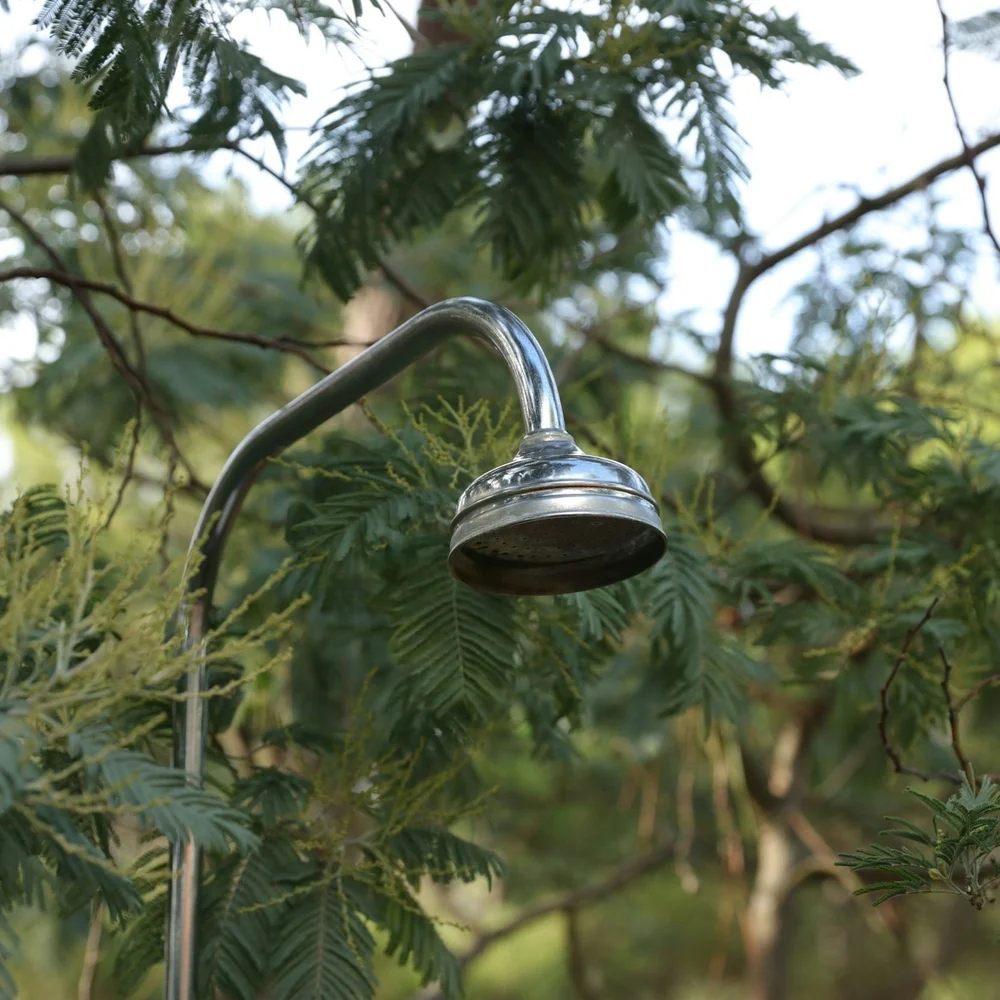
Standard indoor fixtures are not built for direct sun, rain, and temperature swings. Look for shower valves and heads rated for exterior use, typically brass or stainless steel with UV-resistant finishes. PVC piping works well for cold runs, while PEX is a strong choice for hot water lines because it handles temperature changes without cracking. If the shower will see freezing temperatures, install a frost-proof or freeze-resistant valve and plan for a way to drain the line completely before winter.
WHY PROFESSIONAL INSTALLATION PAYS OFF
Running a new water line outdoors means tapping into your home's plumbing system, which affects pressure and requires proper shutoff valves so the line can be serviced or winterized independently. A plumber will also make sure any drain connection meets local code, since improperly draining greywater outdoors can create standing water issues or run afoul of city regulations. Getting this right the first time means years of trouble-free use instead of a shower that leaks, floods a corner of the yard, or freezes and cracks the first cold snap.